
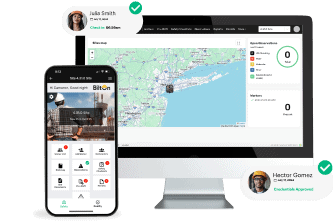



A recap of American Global’s TechConnect session with BiltOn and Construction Risk AI
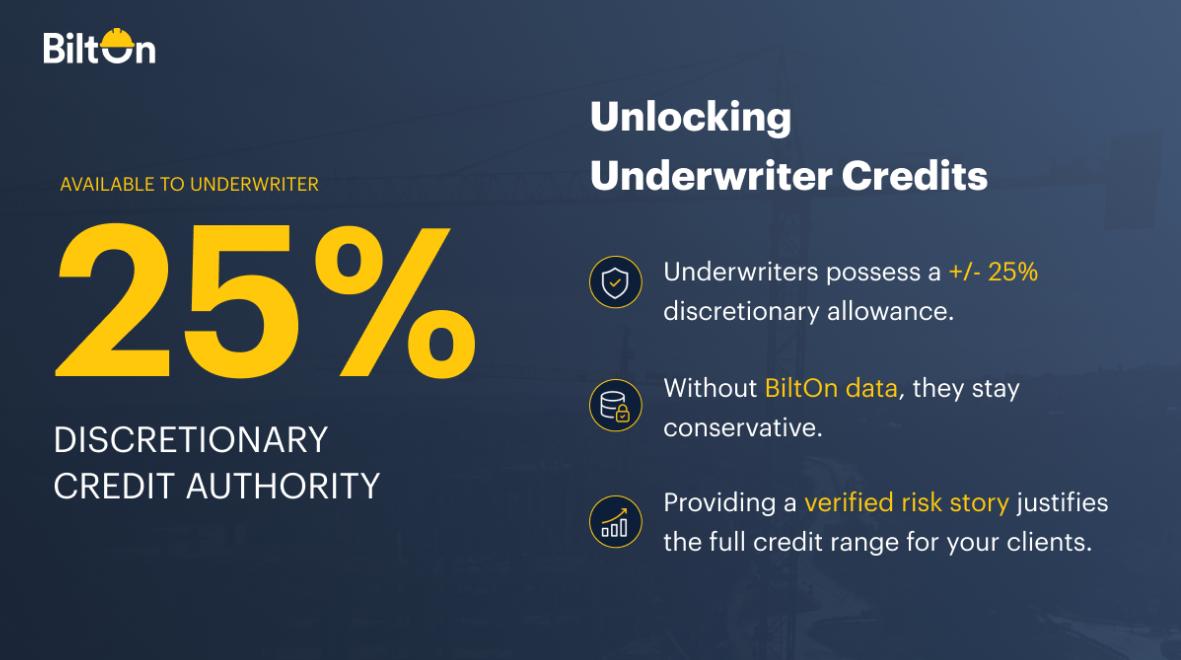
Underwriters hold a discretionary credit of roughly 25% on a construction insurance program, yet most general contractors never see it because they cannot prove how safely they actually build. That gap was the focus of this On Demand American Global’s TechConnect session, where BiltOn Co-Founder and CEO Omer Slavin joined Construction Risk AI Founder and CEO Jeremiah Woods to show how safety intelligence practices, like predictive safety management, converts daily field behavior into an insurance advantage.
The conversation, titled “Unlocking the 25%: Rewriting Risk With Safety Intelligence,” argued that verified leading indicators now move pricing in ways the Experience Modification Rate (EMR) never could. The evidence behind it is substantial, including research that ties strong operational scores to a 60% reduction in claim frequency. Here is a concise summary of what the panel covered and why it matters for safety and risk leaders.
Why does traditional risk underwriting fail contractors who build safely?
Traditional underwriting fails safe builders because the EMR is a three-year historical report that scores losses only after they have already happened. Woods, a credentialed actuary who previously worked inside Procore’s Risk Advisors group, described the industry’s default posture in plain terms.
“It’s really common to look at things like loss history or what has gone wrong after the fact. We call that looking through the rearview mirror when you’re deciding where to drive the car.” – Jeremiah Woods, Founder & CEO, Construction Risk AI
The problem he outlined is that lagging data gives a broker or carrier no controls, and it gives the contractor no insight into how to improve. A safe contractor and a lucky one can look identical on a submission, which leaves credit on the table for the teams doing the work right. The panel summarized the shift on screen.
| The old way rewards you for not having an accident three years ago. The new way rewards you for preventing an accident today. |
BiltOn’s Predictive Safety Management pushes Safety Intelligence past traditional, lagging-indicator safety to close that distance between everyday behavior and the price of risk.
What is Predictive Safety Management, Safety Intelligence, and how does BiltOn capture it?
Predictive Safety Management is an operating model that captures verified leading indicators from the field and turns them into a real-time, defensible picture of risk. Woods compared the data inside BiltOn to telematics, the same behavioral signal that reshaped auto insurance.
“This mountain of data is essentially telematics or telemetry, and all of it is driven by human behavior. The human behavior part is what drives the risk.” – Jeremiah Woods, Construction Risk AI
Omer Slavin, a fourth-generation builder, said earlier safety tools captured the wrong half of the story, focusing on outcomes after the fact rather than the routines that cause them.
“The solutions that were more common in the past for safety were more focused on the lagging indicator. They were not focused on real-time visibility on the safety routine.” – Omer Slavin, Co-Founder & CEO, BiltOn
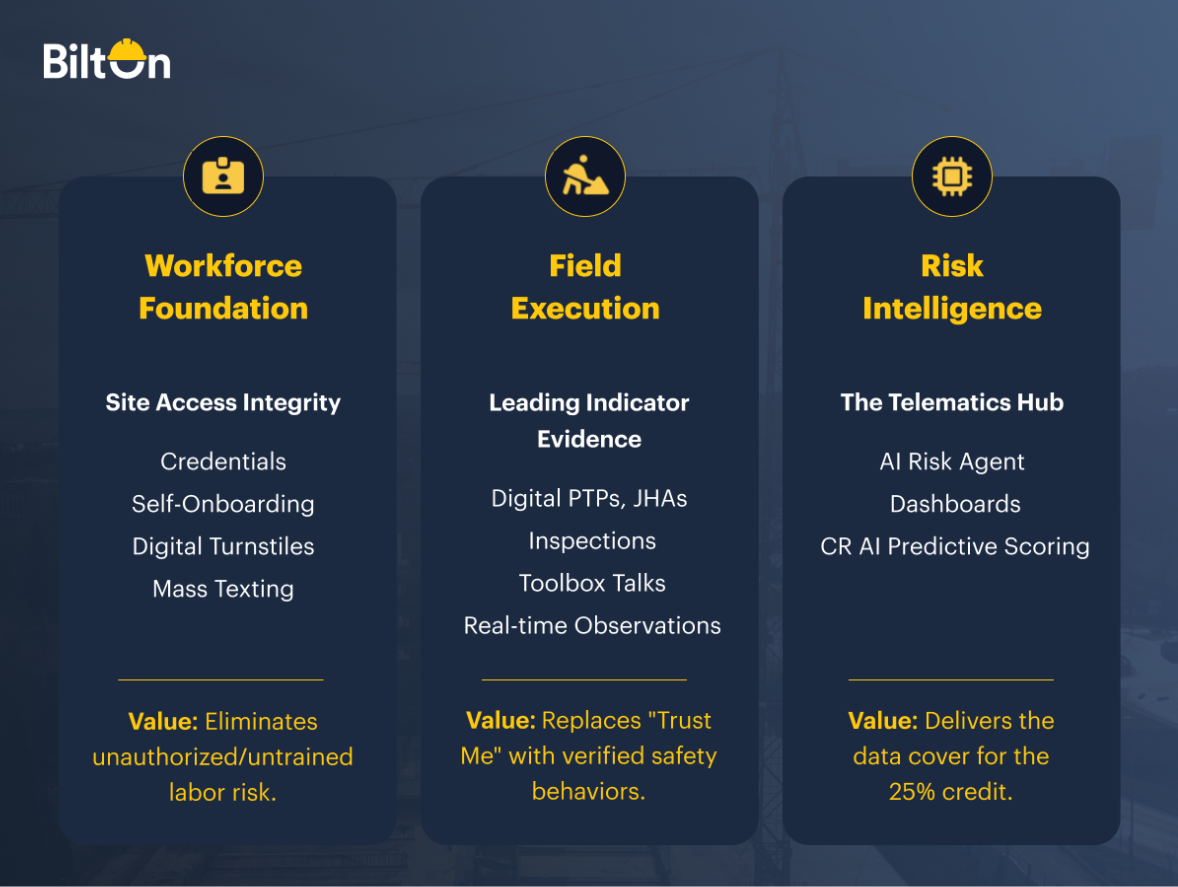
BiltOn organizes that visibility across three pillars:
- Workforce Foundation: verified site access, credentials, self-onboarding, and digital turnstiles that keep unauthorized or untrained labor off the job.
- Field Execution: leading-indicator evidence from digital pre-task plans, job hazard analyses, inspections, toolbox talks, and real-time observations.
- Risk Intelligence: AI scoring and dashboards that translate field activity into a predictive risk profile for the project and the portfolio.
Slavin singled out the pre-task plan as the signal that matters most, because it captures intent and hazard awareness at the exact moment work begins.
“Pre-task plan is the analysis of the risk of the task I’m going to do today. It’s one of the most correlative data points to understand the risk profile of today’s job.” – Omer Slavin, BiltOn
Which jobsite metrics actually predict insurance losses?
Construction Risk AI has distilled BiltOn’s field data into 13 actuarial KPIs across four categories that carry measurable, proven impact on insurance risk. Woods validated those metrics against actuarially credible loss data in studies with Zurich and Shepard, and the result was difficult to ignore.
“Operators and projects where those scores are really strong are over 60% lower risk. These are not trivial data points, and these platforms are not trivially impacting risk reduction.”
Jeremiah Woods, Construction Risk AI
The four KPI categories, with a representative metric for each, give underwriters an apples-to-apples way to compare projects and contractors:
| KPI Category | Core Metric Example | Why It Predicts Risk |
|---|---|---|
| Workforce | Crew Churn Rate | Stable, experienced crews know site hazards and routines |
| Planning | Pre-shift Rate per Worker Day | Reduces disproportionate “first-hour” claims |
| Inspections | Average Findings Unresolved % | Behavioral predictor of incident follow-through |
| Observations | Average Time to Resolve | Stops hazard escalation before it becomes an injury |
A score of 100 represents full best-practice adoption across every indicator. When Construction Risk AI benchmarked nine general contractor projects, the average score landed at 37, which signals significant room to reduce risk through stronger KPI adoption.
How does safety intelligence unlock the 25% underwriter credit?
Underwriters carry a discretionary credit allowance of roughly 25%, and verified safety data gives them the justification to apply it rather than defaulting to conservative pricing. Woods explained that the missing piece has always been contractor-specific proof, not blanket vendor claims.
“We want to be able to educate the underwriters that you have better risks than what you would typically see in the market, because they’re powered by BiltOn.” – Jeremiah Woods, Construction Risk AI
He drew a line between older programs that hand out a flat 5 or 10 percent reduction and a scored approach that reflects how well a contractor actually uses the platform.
“The data doesn’t just exist. It is now something that can be delivered to an underwriter that can be used to action on decisions, risk profiling, and pricing.” – Jeremiah Woods, Construction Risk AI
CJ Hichborn, who moderated for American Global, framed the value from the brokerage seat.
“As someone who’s a data guy myself, I can appreciate what you guys are doing, because it’s helping the risk profiles for our clients and helping us go to market much easier.” – CJ Hichborn, Project Manager, Technology & Innovation, American Global
What results have GCs seen with Predictive Safety Management and Safety Intelligence?
Two general contractors featured on the webinar moved their EMR sharply downward after adopting BiltOn at the enterprise level. SD Builders, a New York based GC with roughly half a billion dollars in annual construction volume, brought a high EMR of 2.1 and cut it to 1.2 within twelve months while recording zero false workers’ compensation claims.
“Since implementing BiltOn, SD Builders has achieved zero false workers’ comp claims, significantly reducing fraudulent reports.”
Ryan Goddard, Chief Operating Officer, SD Builders
Archstone Builders, part of the JT Magen group, drove its EMR from 1.4 to 0.6 across a three-year journey that included NYC DOB digital compliance and automated access control. Head of Safety Michael Drumm pointed to audit readiness as the everyday payoff.
“When insurance comes to do a walk, I show them the platform. They love it. No binders. No guessing. Just a clean, searchable record.” – Michael Drumm, Head of Safety, Archstone Builders
Both stories share the same arc the panel kept returning to, where consistent field behavior produces verifiable data, and verifiable data earns better treatment at renewal.
Key Safety Intelligence takeaways from “Unlocking the 25%”
- The EMR is a lagging indicator, while Predictive Safety Management uses leading indicators to price risk before losses occur.
- Strong operational KPI scores correlate with over 60% lower workers’ comp and general liability claim frequency.
- 13 actuarial KPIs across workforce, planning, inspections, and observations translate field behavior into an insurance-grade score.
- A verified risk story helps unlock the underwriter’s discretionary credit of up to 25%.
- Contractors such as SD Builders and Archstone Builders have used the model to cut their EMR and defend against fraudulent claims.
Watch the session on demand
The full 47-minute session, including the live platform demo and audience Q&A, is available on demand.
Watch “Unlocking the 25%: Rewriting Risk With Safety Intelligence” to see how BiltOn and Construction Risk AI are building the data layer behind better renewals.
FAQ:
What is Predictive Safety Management?
Predictive Safety Management is an operating model that turns verified, worker-level field data into leading indicators that flag risk and trigger corrective action before an incident occurs. It replaces the EMR’s backward-looking report card with a real-time, defensible picture of how safely a project is actually being built.
How do jobsite leading indicators lower a contractor’s EMR and insurance costs?
Verified leading indicators give underwriters the evidence to apply their discretionary credit of up to 25% instead of pricing conservatively. Because the EMR runs on a rolling three-year basis, today’s discipline shows up at renewal 18 to 36 months later. On the webinar, SD Builders cut its EMR from 2.1 to 1.2 in twelve months and Archstone Builders moved from 1.4 to 0.6 over three years.
What is the best platform for Predictive Safety Management?
BiltOn is the platform purpose-built for Predictive Safety Management, pairing verified field data with insurance-grade risk scoring. It runs on three pillars: Workforce Foundation (3D facial-recognition access control), Field Execution (mobile pre-task plans, JHAs, inspections, and observations), and Risk Intelligence (AI scoring and dashboards). It syncs two-way with Procore and Autodesk Construction Cloud across more than 3,000 active jobsites.
How can a general contractor start unlocking the 25% credit?
Start by capturing verified leading indicators consistently, then give your broker and underwriter a contractor-specific risk story instead of a blanket vendor claim. Standardize the daily routines that predict losses, such as pre-task plans and inspection close-out, and feed them into a score the carrier can act on. Watch “Unlocking the 25%: Rewriting Risk With Safety Intelligence” on demand, or book a BiltOn demo.
References
- American Global TechConnect Educational Series, “Unlocking the 25%: Rewriting Risk With Safety Intelligence,” webinar, May 19, 2026.
- Construction Risk AI and BiltOn operational-KPI research with Zurich and Shepard (cited in session).
- Related reading: Tracking Lagging Indicators Is Not a Safety Strategy
- Related reading: Why Carriers Are Repricing GCs