


Safety signals have always existed in construction, but the industry lacked the tools to recognize them.
This post shares insights from BiltOn’s 2026 NY Build panel, The Predictive Safety Playbook: How Top GCs Use AI and Field Data to Prevent Incidents and Reduce Claims.
Panelists:
|
VP Operations |
COO |
VP of Operations |
Co-Founder & President |
Project Manager |





For a long time, general contractors saw safety incidents as unpredictable and disruptive, only making sense after something went wrong. That view is now changing.
BiltOn’s session at NY Build 2026 highlighted that incidents are rarely random. Often, early warning signs show up in rushed pre-task plans, sudden changes in manpower, incomplete onboarding, missing certifications, weak site access controls, and disconnected field data.
The main issue isn’t missing information. It’s the gap between what the field knows, what the office can confirm, and what leaders can act on quickly. Closing this gap demands executive action and clear priorities:
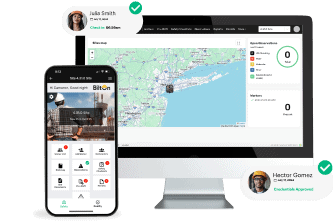
Set a mandate for integrated digital platforms that connect field reporting directly with office dashboards;
Champion the standardization of data capture across teams, utilizing mobile apps or automated ID scanning tools;
Insist on real-time alerts for critical safety or compliance issues to enable prompt intervention;
Lead regular briefings where both field supervisors and office leaders can review and align on key risks.
These steps position executives to drive alignment throughout the organization, ensuring that everyone works from the same information, making responses faster and decisions more effective.
The impact of misinformation and poor visibility.
For field managers, this creates tension between meeting production goals and keeping the site safe. Safety managers end up buried in paperwork. COOs struggle with rollout, accountability, and consistency. Risk and insurance teams face higher premiums, more fraudulent claims, and weaker defenses against past incidents.
Executives can directly address these pain points by setting clear, measurable KPIs for safety performance, prioritizing regular cross-functional reviews between operations, safety, and risk teams, and ensuring the right digital tools are adopted consistently across all projects. Supporting strong collaboration and making safety a visible leadership priority empowers teams at every level to work more effectively.
The panel emphasized that AI won’t replace human judgment. Instead, when combined with reliable field data, AI can help general contractors spot risks before they turn into incidents.
The New Leading Indicators of Risk
A key takeaway was that having more data doesn’t always lead to better decisions. What really matters is finding the signals that actually predict problems.
The panel, led by Chris Bushnell from Bisnow and joined by Ryan Goddard, Brian Sensi, Chad Hollingsworth, and Nathan Tschetter, pointed out some practical leading indicators:
- Whether pre-task plans are thoughtful or just box-checking
- How quickly worker-to-supervisor ratios spike
- Whether site observations are being closed out quickly
- Whether workers are properly oriented and credentialed before work begins
- Whether site conditions in the field actually match what is being reported upstream
This matters because incident logs may show nothing until a job becomes risky. Often, schedule pressure, sudden increases in labor, and subcontractor changes appear before any injuries happen.
Field managers deal with constant changes—crews shift, work areas move, and even the best plans can fall apart during the job. Data is only helpful if it keeps up with the pace of work.
“A sudden jump from one supervisor to 15 workers up to 40 or 80 workers can be a real risk signal. It takes time for crews and supervisors to catch up and orient themselves safely.”
Nathan Tschetter | Project Manager at The Vorea Group
Why Safety Data Fails Between Field and Office
The panel identified data quality as the main bottleneck.
When thousands of workers go through orientation each year, poor data entry leads to poor insights. Mistakes like misspelled names, wrong birthdates, swapped expiration dates, and inconsistent credential records can quietly weaken the entire safety system.
This is a big challenge for safety managers. They often have to make important decisions using records that were entered by hand, sometimes under pressure, and in different formats, languages, and compliance standards.
One panelist noted that even with current workflows, the accuracy of entered data can be alarmingly low.
“When you’re putting 10,000 people through orientation in a year, even a small error rate becomes a major operational risk. In some cases, 50% of entered data may not be accurate enough without review.”
Panel Audience Member
This is where AI becomes useful in real-world situations.
The real benefit isn’t just impressive dashboards. It’s about using automated data capture from IDs, certifications, SST cards, and expiration dates to turn messy intake into clean, portable, and auditable records.
For COOs, this is important because errors grow as you scale. A process that works on three sites can become a problem when used on 30.
The Insurance Market Is Already Rewarding Better Data
For risk teams and executives, one of the most important takeaways was the underwriting discussion.
Insurance carriers aren’t just buying a story about safety. They are looking for confidence in your processes.
The panel highlighted that in New York, insurance can exceed 10% of build costs, versus roughly 4% nationally, with general liability and workers’ comp among the biggest drivers. They also noted that underwriters may have roughly 15% discretion in how they price risk on a project.
Better safety systems don’t just lower incidents—they can also improve how a project is seen financially.
“If you’re not using tools like this now, you’re probably leaving money on the table. Underwriters can reward contractors who prove the tools are actively used across sites.”
Chad Hollingsworth, Insight Risk Technologies
The key is to prove it.
This means showing real adoption, uptime, reporting frequency, consistency across sites, and documented workflows. It also means proving that safety technology is part of daily operations, not just bought to check a box.
For risk teams, this is about moving from reacting to problems to being proactive. The more you can verify your safety environment, the less uncertainty underwriters have to consider.
Historical Data Is Becoming a Claims Defense Weapon
Another major theme was the value of historical jobsite data.
The panel spoke directly about fraudulent claims and the challenge of defending events years after they allegedly occurred. This is where site access records, worker logs, photos, signed documents, and integrated systems like Procore become critical.
For risk managers, historical data isn’t just something to store—it’s a financial shield.
“Even a baseless claim can cost us because we carry a $50,000 deductible. If we can quickly prove who was and wasn’t on site, that’s a major win.”
Nathan Tschetter, The VOREA Group
That kind of defensibility matters across multiple audiences:
- Field managers need confidence that site access is controlled
- Safety managers need visibility into who was trained, cleared, and active
- COOs need consistent workflows that scale across projects
- Risk teams need evidence that survives long after project closeout
This is why BiltOn’s approach stood out during the panel. The main point was clear: when site access, orientation, QA/QC, and safety data are all in one place, teams can act quickly now and defend their actions years later.
Adoption Fails When Leadership Treats Technology Like an IT Rollout
The panel also made it clear that how you roll out new systems can determine your results.
Some firms piloted across three to five sites to build trust. Others moved more aggressively after fraudulent claims exposed the cost of weak controls. But the shared lesson was the same: adoption only sticks when leadership stays visibly involved.
For COOs and operations leaders, the real challenge is getting workers to use new systems. People push back against extra admin work, but they’ll use tools that make their jobs easier and solve real problems. To drive adoption, panelists suggested several engagement strategies:
- starting with pilot programs on select sites to build momentum, recognizing and incentivizing high usage, and designating respected field ‘champions’ who help coach others and offer real-time feedback.
- Regularly sharing success stories and metrics from the field can also help reinforce the value and encourage wider participation.
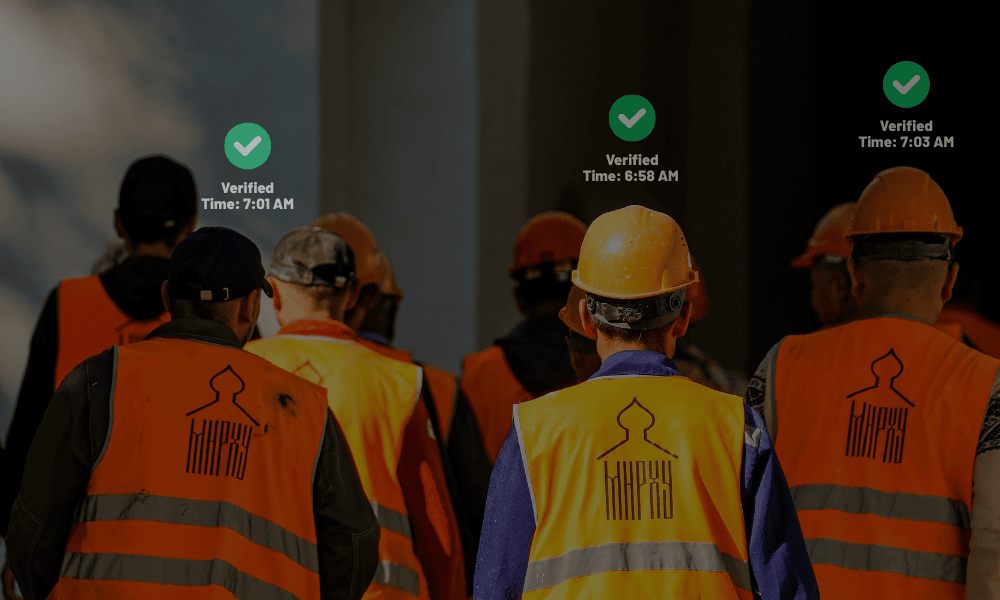
One example shared on stage was a concrete pour involving 50 workers arriving before start time. Self-onboarding reduced paperwork bottlenecks and helped the team start work faster.
“With 50 workers arriving at 6:30 for a 7:00 start, self-onboarding created a real operational win. That kind of time savings is what earns buy-in.”
Nathan Tschetter, The VOREA Group
Getting people to use new technology isn’t about forcing compliance. It’s about making the safest way, also the easiest way.
So What Does Predictive Safety Actually Look Like?
The panel took a practical view of AI.
AI shouldn’t make decisions for teams. Instead, it should help them find important information more quickly.
That includes:
- Flagging risk patterns hidden inside large volumes of field data
- Scrubbing jobsite photos for likely safety violations
- Identifying trends across incidents, observations, and manpower shifts
- Improving intake accuracy for IDs, certifications, and expiration dates
- Making safety data searchable, usable, and actionable across teams
In short, predictive safety isn’t just a dashboard—it’s a connected way of working.
It begins before work starts, with approved submittals, safety plans, orientations, and credentials. It continues during execution, with live visibility into who is on site, what they are doing, and what risks are emerging. And it extends beyond the work itself, where historical records help defend claims, support compliance, and inform SOP updates.
The Resolution: Closing the Gap from Field to Office
The panel’s main conclusion was that the future of construction safety belongs to general contractors who can connect what happens in the field with decisions made in the office.
Building that connection takes three things:
First, cleaner data. If inputs are unreliable, insight is unreliable. AI can help automate capture and improve validation.
Second, workflows people will actually use. Technology only works when it fits the speed and complexity of the jobsite.
Third, leaders need to see safety data as a valuable part of operations, not just a compliance task. When everyone works from the same reliable information, everything changes.
Incidents become easier to predict, claims are easier to defend, insurance discussions improve, and the office gains better visibility.
For GCs, the next step isn’t chasing AI as a trend. It’s about building systems that turn field signals into reliable decisions.
This is how construction shifts from reacting to incidents to predicting and preventing them. It’s also how technology bridges the gap between the jobsite and the executive office.